About DecisionGraph

We built the decision layer we always wished we had.

Most businesses collect data in a dozen systems, run it through spreadsheets, and then ask people to make high-stakes calls from memory. We saw the cost of that disconnect firsthand. So we set out to fix it.

Decisions are the real work. The tools just made them harder.

We spent years inside organizations where every function had its own data. Sales had CRM. Finance had the ERP. Marketing had ad platforms and customer lists. Operations had supply chain dashboards and vendor files. Each system was excellent at its own job, but none of them were excellent at the job that actually mattered: helping the business decide.

Decisions were made in meetings, in email threads, and in shared documents that were out of date the moment they were written. The smartest people in the company were spending their time stitching together spreadsheets and asking colleagues, "What did we decide last time?"

We saw good decisions get delayed by bad data. We saw bad decisions get made because the right evidence was hidden two layers deep in a tool no one checked. We saw teams repeat the same analysis every quarter because no one had captured the reasoning the first time.

That is why we built DecisionGraph. Not as another analytics tool. Not as another AI assistant. As a single layer that sits on top of the systems you already have, so the complete picture is always available when it is time to decide.

Decisions take too long
Evidence gathering swamps the process.
Data is everywhere, insight is nowhere
No one system holds the whole picture.
Institutional knowledge walks out the door
Context lives in people, not systems.
Learning is invisible
Outcomes rarely feed back into the next decision.
The Pain Points

Why decision-making breaks down in growing companies.

We interviewed leaders across finance, operations, marketing, and product. The same patterns came up again and again.

The data is scattered

Every team owns its own system. Each one is accurate, but none of them speak. The answer to a simple question like, 'Which customers should we prioritize?' lives across CRM, billing, support, and marketing data.

Decisions start from scratch

People begin with the same blank slide every time. They hunt through files, re-run old reports, and reconstruct history. The first half of every decision is just remembering what the company already knew.

Speed wins over quality

When evidence takes too long to assemble, executives make calls on intuition. The loudest voice in the room carries the day. Good analysis arrives after the decision is already made.

Governance is an afterthought

Auditors and compliance teams ask, 'Who decided this, and why?' The trail is a chain of emails and meeting notes. When regulators or boards want proof, the company has to rebuild it from memory.

Context never compounds

Each decision is a one-off event. The reasoning is not captured. The outcome is not measured. The company never gets smarter, even though it makes the same kinds of decisions every quarter.

Heroic work hides the problem

Talented analysts and operators pull all-nighters to make the case. Their effort is celebrated, but the underlying system is never fixed. The real heroism would be making it repeatable.

Our Approach

What we believe about enterprise decisioning.

DecisionGraph is not a black box. It is a system of record for how the business chooses to move forward.

01

Start with the decision, not the dashboard.

A dashboard tells you what happened. A decision requires a recommendation, trade-offs, and a clear path forward. The interface should be built around the decision, not the data source.

02

Evidence should be connected, not collected.

The job is not to dump every report into one place. The job is to connect the facts that matter to the decision at hand: customers, contracts, financials, goals, and the reasoning from past choices.

03

Reasoning must be visible and traceable.

Every recommendation should show the chain of evidence that supports it. Decision makers need to see what was considered, why it matters, and where the confidence comes from.

04

Outcomes should teach the next decision.

When a decision is executed and measured, the result becomes context for the next one. The system gets smarter as the organization learns, not just as more data arrives.

Our Story

From a single painful decision to a company.

2022

The spark

We were working with a scaling company that had grown from 20 to 200 people. Their decisions were still made the same way they were at 20: heroic analyst work, late-night decks, and gut calls. The gap between their data and their decisions was costing them millions.

2023

The prototype

We built the first version of DecisionGraph as an internal tool. It connected a handful of systems, mapped the entities that mattered to decisions, and traced recommendations back to the source. The first test case was a marketing budget allocation. It saved a full week of work and produced a better answer.

2024

The platform

We expanded the product into a full decision workspace: graph-based context, scenario comparison, optimization, and governance. Teams started using it for hiring, vendor selection, inventory, and market expansion. The common thread was always the same: connect the evidence, make the decision, learn from the outcome.

Today

The decision layer

DecisionGraph is now an enterprise decision operating system. It sits above the tools your business already uses and turns them into a single source of truth for the decisions that matter most.

Meet the Team

Built by people who have lived the problem.

We are operators, engineers, and decision scientists who believe that business software should be as good at decisions as the people using it.

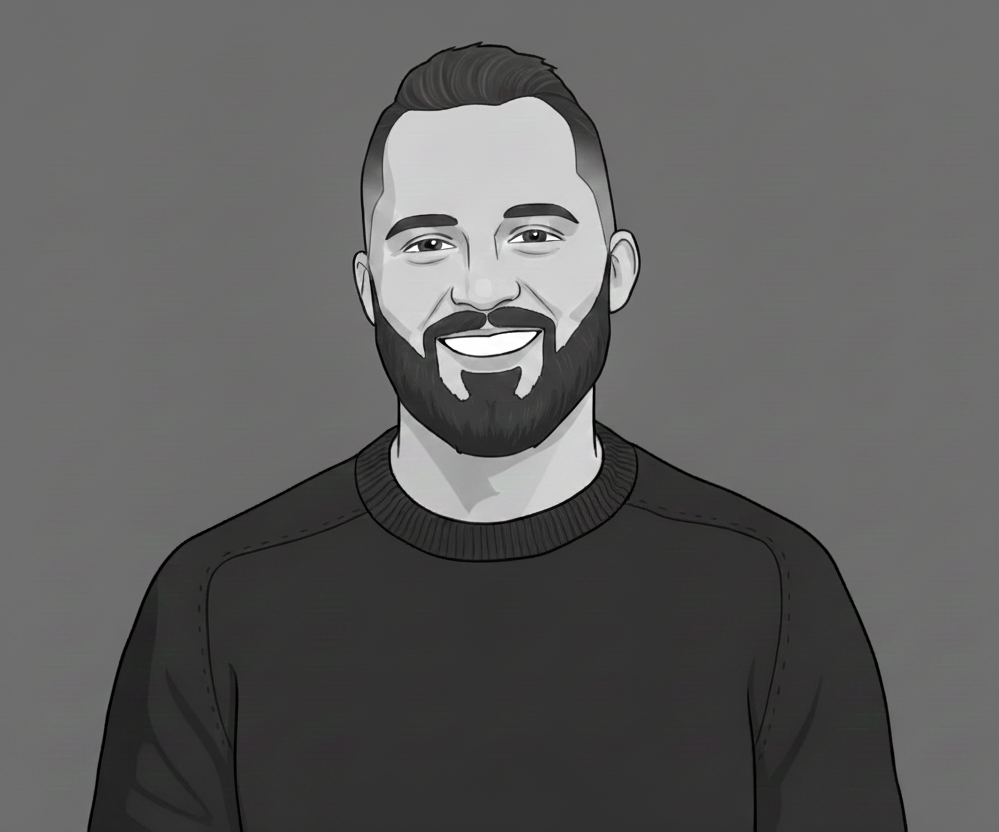
SO

Spencer Oliver

Founder & CEO

Former enterprise strategy and analytics leader. Spent a decade watching fast-growing companies struggle with the same decision problem.

DPM

Dr. Priya Malhotra

Chief Product Officer

Built decision science platforms for Fortune 500 firms. Believes every recommendation should carry a clear audit trail.

MC

Marcus Chen

Head of Engineering

Distributed systems and data infrastructure specialist. Focused on making connected evidence secure, fast, and governable.

AT

Ava Thompson

Head of Customer Success

Former enterprise implementation lead. Helps customers turn their first high-stakes decision into a repeatable decision practice.

Values

How we work and what we optimize for.

Decisions are the product

We measure success by the quality of decisions our customers make, not the number of charts they build.

Trust is engineered

Recommendations must be explainable, evidence must be traceable, and access must be permissioned by default.

Context compounds

The value of DecisionGraph grows with every decision you make, because the system learns what matters to your business.

Great tools respect the operator

Software should amplify judgment, not replace it. We build for the people who own the decision, not the machine that generates it.

Ready to make your next decision a better one?

Join the companies that are replacing heroic spreadsheet work with a connected, governed decision practice. Request a demo or start a decision now.